
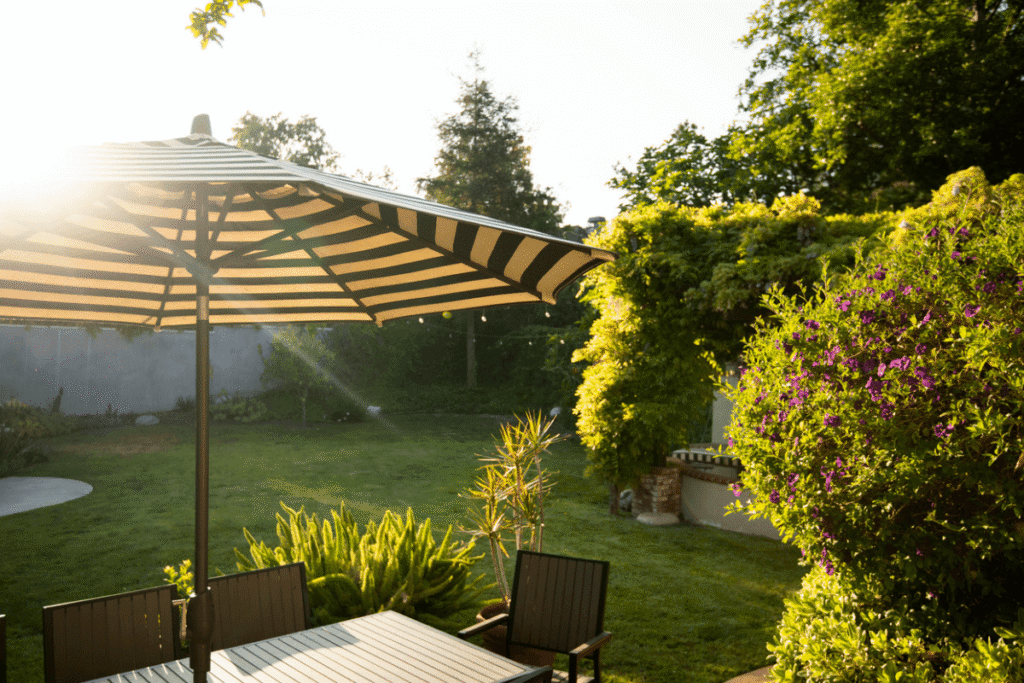
If you’ve seen “south-facing garden” listed on a plot and wondered if it’s just estate agent sales spiel, it’s not.
A south-facing garden brings more sun, warmer rooms, and easier growing, but there are some cons, too. It’s worth understanding these details before you decide if it matters to you.
This article outlines the pros and cons of a south-facing garden, including a breakdown of how it compares to other types of gardens and which plants thrive when facing the south.

What does a south-facing garden mean?
A south-facing garden simply means the rear of your home faces south. In the UK, the sun stays in the southern half of the sky for the majority of the year, so a south-facing garden receives direct sunlight for most of the day rather than mainly in the morning or evening.
Understanding south-facing gardens compared to other aspects
A south-facing garden gets the most consistent direct sunlight throughout the year. But the difference between garden aspects shrinks dramatically in summer and grows just as sharply in winter.
That’s because the sun doesn’t just rise and set at different compass points as the seasons change; it also climbs much higher in the sky. In England, the midday sun reaches around 60° above the horizon in June but only about 15° at the winter solstice. Let’s summarise what this means:
- Summer: The sun is higher in the sky. It casts shorter shadows and moves from north-east to north-west. This means most gardens get lots of direct sunshine, regardless of their aspect.
- Winter: The low sun creates longer shadows and moves along a narrower path in the southern sky. As a result, garden orientation plays a bigger role in how much direct sunlight you get.
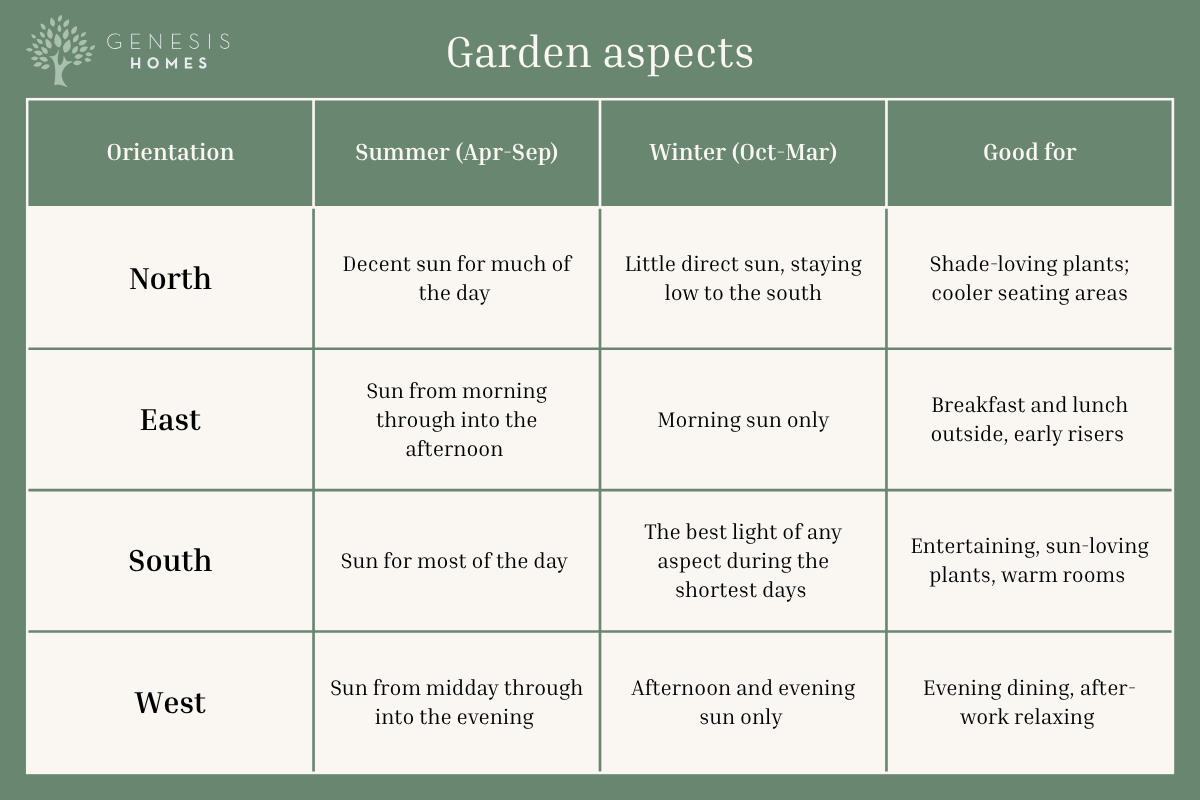
Here’s how garden aspects compare through the year:
How to tell if your garden is south-facing
To check if a garden faces south, stand with your back to the house. Then, use a compass app on your phone. You can also search for the property on Google Maps to see which direction the back elevation faces.
If you’re looking at new build homes, ask the developer. On a new build development, the site plan will show plot orientation clearly, so no guesswork is needed.
Is a south facing garden good? The pros and cons explained
For most people, yes, a south-facing garden is desirable as it means more year-round sunshine. But it comes with trade-offs that are just as worth knowing before you decide how much it matters to you. Let’s take a look at both.
South-facing garden benefits
- Sunlight isn’t just in the garden for most of the day, but through your windows too
- Warmer rooms at the back of the house, which can mean less need for heating in the evenings during winter
- Faster drying for patios, decking and washing lines after rain
- A wider range of plants will thrive, including many sun-loving Mediterranean varieties

South-facing garden downsides
- Soil dries out faster, which means more watering, especially for new plantings
- Furniture, decking and fencing can fade or bleach with sustained UV exposure
- South-facing bedrooms can get very hot during summer heatwaves, so shading or ventilation is worth planning for
- Less natural shade can be a downside for young children, pets, or anyone who prefers a cooler spot to sit out
- Glare on bright days may require investment in a parasol, pergola or awning over patio areas
Rightmove data is divided. Rightmove found that homes with a south-facing garden sell for £22,695 more on average than homes without. That’s a 7% national premium. They also sell faster in almost every region. This is a plus if you already own one and plan to sell. But if you’re buying, it’s a premium you’ll pay upfront, so it’s worth factoring into your budget instead of seeing it as a bonus.
The best plants for a south-facing garden
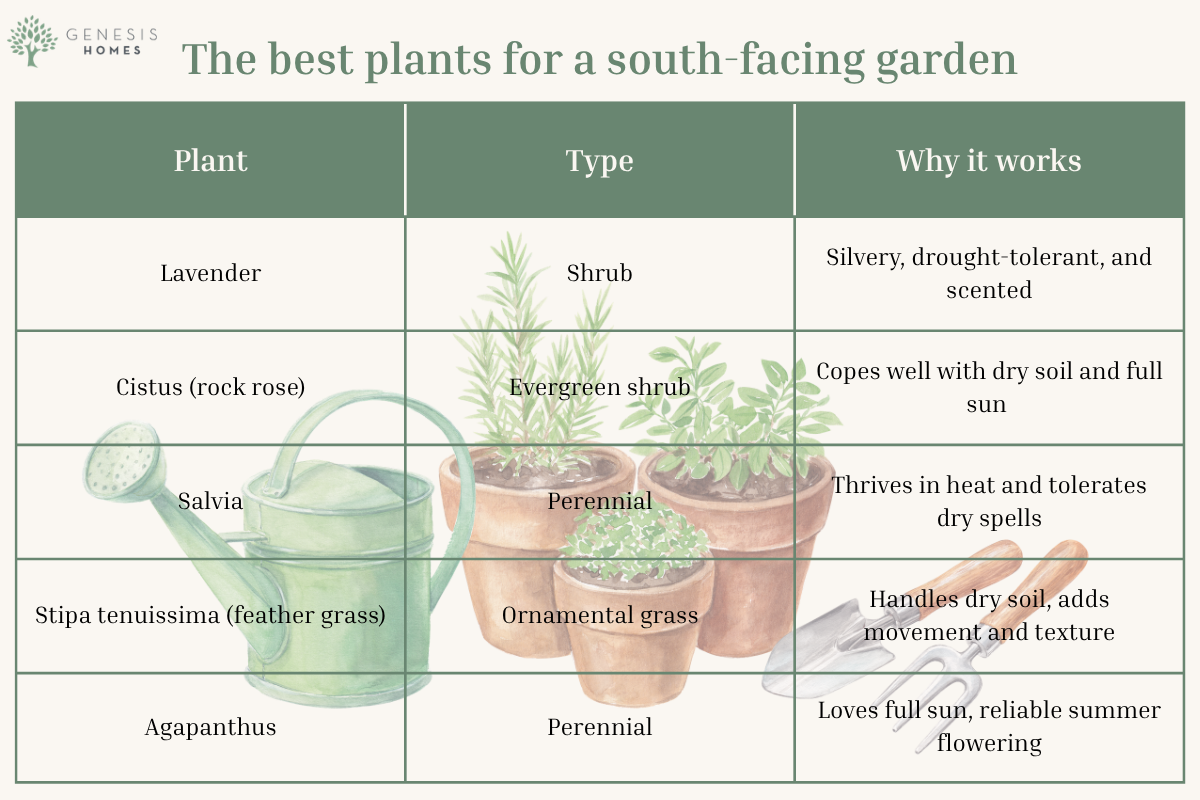
The plants that cope best in a south-facing garden can tolerate intense sun and drier soil. These tend to have silvery, waxy or needle-like leaves that reduce water loss. Build your planting around these types to save time and watering later. Here are some great examples:
Related reading: For more garden inspiration, check out our article on new build garden ideas.
Choose your garden orientation when you buy with Genesis Homes
Unlike looking at older houses, viewing properties on a new build development means you can choose your ideal garden orientation. Reserving early often gives you a genuine say in the direction your garden faces.
Whether you’re set on all-day sun or would rather balance it with some shade, orientation is one of the few things you can actually plan for on a new build. Explore our current new build homes to see available plots and speak to our team.