

When you’re considering buying a new home, you need to figure out your budget before looking at options. Unless you’re able to buy a home outright, buying a new house involves borrowing money. Looking at mortgage products, providers, eligibility criteria, mortgage rates and fees can be daunting, especially if you’re a first time buyer. Even those who have purchased a home before may find wading through options confusing.
That’s why we’ve put together a handy guide on how to get a mortgage. In this article, we’ll give you an overview of the process with a helpful step-by-step guide on what’s involved every step of the way.
Buying a new home should be an exciting milestone, so let us provide you with a better understanding of what’s involved and answer your mortgage questions. We break down the nuances of borrowing to ensure you get the most suitable product, allowing you to look forward with enthusiasm rather than trepidation.
What Is a Mortgage?
A mortgage is a loan that you use to buy a home. Banks, building societies and lenders allow you to borrow a sum of money which you agree to pay back over a fixed period with added interest. Your repayment schedule, what you pay each month, will depend on how much capital you borrow, over what duration and at what interest rate.
For example, if you borrow £300,000 over 25 years (the average mortgage term in the UK currently) at 4% interest, your monthly repayments will be approximately £1,583.
A deposit will usually be required at the point of exchanging contracts, with the mortgage loan making up the balance of funds. Mortgage deposits typically vary from 5-20% of the total loan amount.
Read more about exchange and completion for a detailed look at this part of your homebuying journey.
Until your mortgage is paid off, you don’t fully own your home, and your lender has the right to possess it should you default on payments.
Are New Build Mortgages Different?
A new build mortgage differs slightly to mortgages for existing properties as you are buying a house that is still being built.
Buying a new home requires you to pay the homebuilder a reservation fee to secure your preferred plot. At this point, you’ll commit to exchanging contracts within 6-8 weeks and paying a deposit. Lenders may require regular progress updates if the home is not finished to anticipate potential delays, and assess if an extension to the mortgage offer is necessary.
Lenders will usually carry out a valuation to confirm the value of the home once the property is finished. They do this to agree the final home value is in line with the original mortgage offer. In this instance, new home mortgages work the same way as buying an existing house.
Aside from this, buying a new home may have additional perks such as low deposit offers, part exchange services and help to move schemes.

Step-by-Step Guide to Getting a Mortgage
To help you understand the process of applying for a mortgage on a new build home, we’ve broken it down into six easy-to-understand steps. This guide is for anyone looking at mortgages for new build homes, or mortgages in general.
If you’re a cash buyer who can pay for their new home outright, you might not need a mortgage. If this is the case, skip to our FAQs below for answers to common home buying questions.
Step 1: Check Your Finances
This might seem obvious, but the best place to start when looking for a new home is your bank statements. Understanding your income, outgoings, savings and any investments, will help you assess how much deposit you can afford and what repayments are affordable.
If you follow a rule of thumb that your mortgage deposit should be around 10% of the value of the home you want to buy, you can work out which properties are potentially within your budget. For example, if you have £30,000 in savings, you could look at properties around the value of £300,000.
Hidden costs
Be mindful that the cost of buying a home extends to estate agents fees for selling an existing home, conveyancing or solicitors fees for legal representation, removals costs, surveys, stamp duty and mortgage fees. These need to be paid at various stages of buying any home, in addition to your deposit.
Using the same example, if you have £30,000 in savings, this could equate to a £20,000 deposit with £10,000 to cover associated homebuying costs (a high-end estimate that includes some contingency). In this case, you’d be looking at homes around the £200,000 mark.
There are exceptions to these examples. Some lenders and homebuilders offer low deposit options on new homes, enabling you to pay a smaller deposit up front. This might mean you can increase your overall budget. Also, you may not have to pay as much stamp duty if your home is under a certain value or you’re a first time buyer.
Saving schemes and incentives
If you’ve already started looking at properties above this price point, consider whether you might need to save more funds before applying for a mortgage at this stage. Alternatively, there are saving schemes such as Lifetime ISAs which help to save for new homes. Incentives by homebuilders such as key worker discounts and part exchange schemes may also bring down the amount of mortgage deposit required.
Top tips for homebuyers
Smart savings
Martin Lewis, the Money Saving Expert, offers great impartial advice for aspiring savvy savers. Sign up to his weekly emails for top tips on how to keep your finances in check in preparation for applying for a mortgage.
Look into homebuyer incentives
From Lifetime ISAs to Help to Buy schemes, there are a variety of ways to save for a home. Do your research to find out how you can benefit from initiatives such as these.
Be realistic
Have realistic expectations about what you can afford to spend versus what you can afford to repay. If your circumstances are due to change, and this will affect your ability to afford your new build mortgage contribution payments, consider delaying your application until you are sure you can afford it.
Check your credit score
Your credit score tells lenders how likely you are to repay money they lend you. Boosting your credit score in advance of applying for a mortgage will make you a more attractive prospect to lenders.
This might include paying off any debt, avoiding using your overdraft, delaying credit checks, cutting unnecessary spending and cancelling subscriptions and memberships you don’t need.There are plenty of ways you can check your credit score online for free.
Experion and ClearScore are two of the best known online tools to check your credit score.

Step 2: Understand Your Mortgage Options
After confirming you’re in a sound financial position to buy a new home, you can look at mortgage products. Mortgages are available at two different rates – fixed and variable.
Fixed rate mortgages
A fixed mortgage rate is a set percentage of interest for a fixed amount of time. After this it reverts to a less advantageous rate. You can usually switch to another lender to benefit from a new fixed mortgage rate after the initial offer has ended.
Variable mortgages
Variable mortgage rates fluctuate over time and are either dictated by the Bank of England base rate or as standard variable rates set by the mortgage lender.
Pros and cons of each
Consider whether you would prefer to pay the same amount each month with a fixed rate mortgage, or if you don’t mind flexible monthly payments that fluctuate with the market.
- Fixed rates are more predictable and can be better for budgeting.
- Variable rates are more changeable and can go up or down.
- They may also have less restrictions should you want to make overpayments to pay back your loan quicker.
- Fixed mortgages may include penalties or limits for mortgage overpayments.
Mortgage term
In addition to your mortgage rate, your mortgage term will determine your monthly payments. Mortgages across longer terms incur lower repayments than shorter term mortgages, which may have higher monthly payments. Taking a longer mortgage term deal might be more affordable in the short term and it is often possible to pay it back sooner. Shorter mortgage terms, if affordable, will mean you own your home sooner.
Interest-only vs repayment
Lastly, your mortgage may be either an interest-only mortgage, where you only pay the interest each month, or a repayment mortgage, where you pay back the interest and some of your capital borrowing. At the end of an interest-only mortgage, you have to pay back the lump sum borrowed, whereas with a repayment mortgage the amount borrowed decreases over time. At the end of your mortgage term, your loan will have been repaid in full.

Step 3: Mortgage in Principle
When you start looking at new homes, you can apply for a mortgage in principle independently online.A mortgage in principle is where you fill in a basic form about your financial circumstances to facilitate a soft credit check. This won’t affect your credit score but will give you an initial indication as to how mortgageable you are and what your borrowing power extends to.
The application process is based on an initial assessment of your circumstances with a soft credit check after which, if successful, you will be issued a mortgage in principle certificate. It can take 24 hours to be granted a mortgage in principle, more if further information is required.
This is not a guarantee of a mortgage but offers proof that you are eligible for the borrowing you require. They can be valid for up to 90 days and show that you are in a proceedable position to estate agents and homebuilders. You should be able to reserve a new home or have an offer accepted on an existing property with a mortgage in principle.
Benefits of a mortgage in principle;
- Gives a clearer idea of your borrowing potential
- Makes you more attractive to sellers
- Speeds up the buying process
- Is free and non-binding
- Helps with planning and confidence

Step 4: Choose a Lender or Broker
Once you have found a property you wish to buy you will either want to enlist the services of a mortgage broker or speak to your existing bank about mortgages. Both these options will guide you through the differences between new homes mortgages, rates, terms, restrictions and fees.
You don’t have to stick to the same lender who provided you with your decision in principle, especially if more advantageous products, rates and terms become available.
Mortgage Brokers
An independent mortgage broker will usually search the whole market to find a mortgage product that best suits your financial circumstances. As they are not usually affiliated with specific lenders, they act as an impartial adviser who can research the best mortgage deals for you. They will either charge you a one-off fee or be given commission by the lender. Either way, they must disclose this to you.
Specific Lenders
Applying for a mortgage with a specific lender, such as a bank or building society, may mean you are more likely to be approved if you are an existing customer, but you may not always get the most competitive rate.
Ask for recommendations
Wading through new homes’ mortgage information online can be onerous. There are so many different providers, comparison sites and mortgage calculators that trying to find the best mortgage option for you can be time-consuming.
We’d suggest asking for recommendations of mortgage brokers. As a homebuilder ourselves, we have details for new homes mortgage services that are tried and recommended.
Step 5: Gather Documents
Once you’ve found a home you want to buy, and a mortgage product that shows you can afford it, you need to start planning for your formal mortgage application.
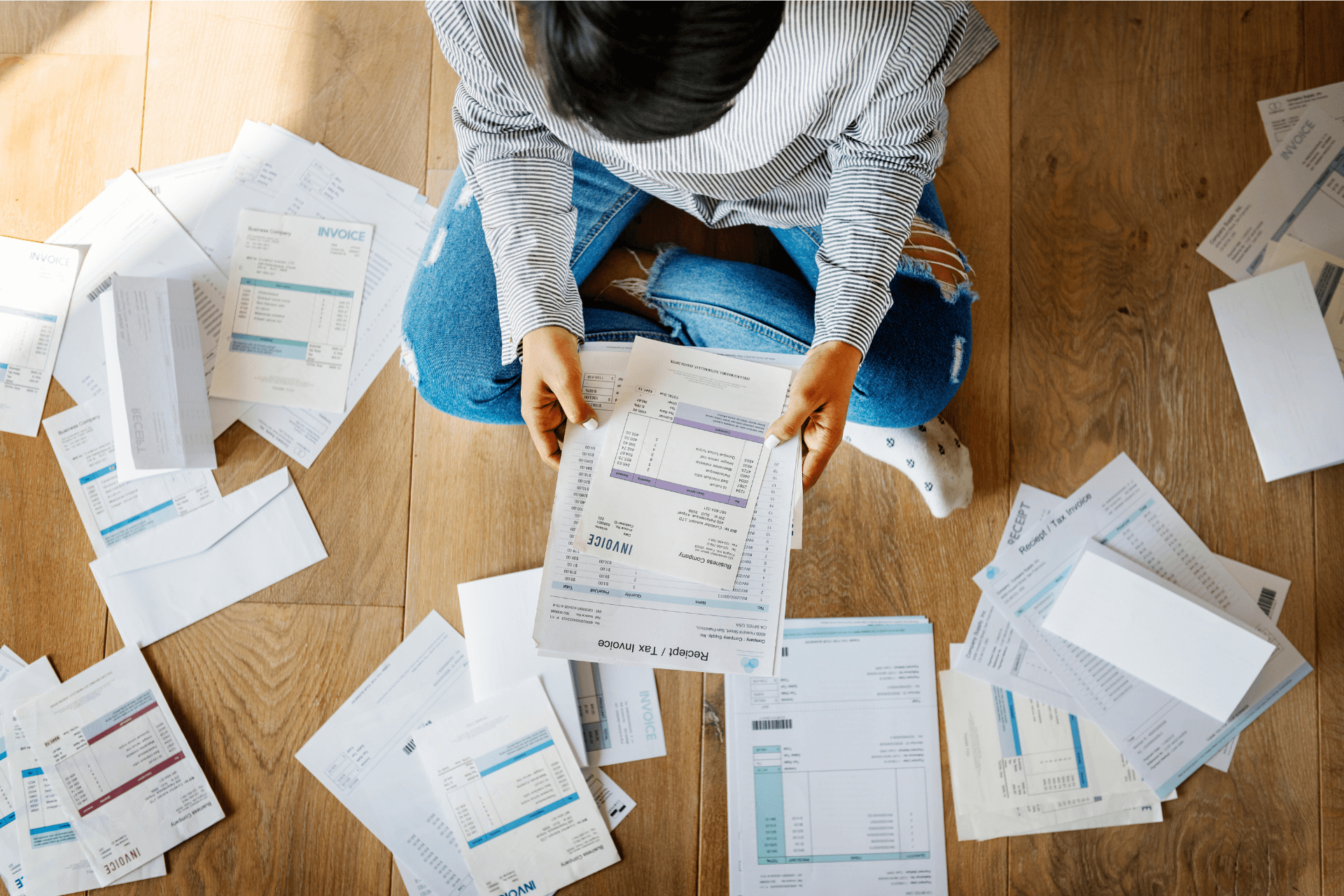
You will need to assemble the following documents:
- Proof of ID – passports, driving licenses
- Proof of address – utility bills with your name and address on
- Proof of income – wage slips – 3-6 months usually
- Bank statements – 6-12 months
- Proof of deposit – screenshot or bank statement
- Details of debts, savings, loans and investments
In addition, if you are self-employed, you’ll need to provide two or more years of business account summaries and copies of your self-assessment submissions (SA302).
If you are applying for a joint mortgage, both parties will have to assemble the required supporting documents listed above.
Step 6: Submit Application
It’s now time to submit your mortgage application. Either you or your broker can make the formal application.
When you have the funds for a deposit, found a property you love, obtained a mortgage in principle and gathered evidence of your financial position, you’ve completed all the groundwork for a successful offer.
Your mortgage offer may take between two and six weeks to be approved. For some, it may take less time, and others might require further information. With plenty of planning and preparation beforehand, your chances of a speedy response and a successful application are much higher.
If you’ve enlisted a mortgage broker to assist you, they should be able to contact the lender directly and update you on your mortgage application progress.

How Working with a Homebuilder Can Make the Mortgage Process Easier
Although there might be different borrowing restrictions and timescales for buying a new build home versus a traditional home, there are plenty of perks too.
✔️ Reliable mortgage advice
Here at Genesis Homes, we’ve been building modern, high-end homes for almost a decade. In that time, we’ve worked with plenty of mortgage brokers. As such, we have a carefully curated list of independent mortgage specialists with extensive experience that come recommended by many of our homeowners. Just ask your sales executive for details.
✔️Communication and support
From the moment you get in touch until after you’ve moved in, we pride ourselves on our customer service. Throughout the whole buying process we provide advice and guidance every step of the way. For example, we advise on what documents lenders require and how to present them. This speeds up pre-approval and saves time, ensuring you don’t miss out on your dream home.
As homebuilders, we often liaise with conveyances and lenders directly, reducing back and forth, and avoiding delays, confusion and miscommunication.
✔️Personalised Care
With a dedicated sales executive, you have one point of contact for all your enquiries, questions and communications. You won’t have to explain yourselves to anyone else, which saves time and ensures a more seamless home purchase.
✔️Incentives and schemes
We offer a variety of initiatives to help with your home move too. Benefit from low deposits, part exchange and key workers discounts to save money, time and hassle.

Mortgage FAQs
Can you reserve a new build without a mortgage?
Yes! You don’t have to have a mortgage to buy a new build home so long as you have the money available.
Your homebuilder will usually ask for proof of funds in place of a mortgage offer to proceed with exchanging contracts. You’ll still need to pay a deposit through a conveyancer or solicitor before exchange.
Do you need life insurance for a mortgage?
No. Your lender or broker will likely offer you a range of insurance products to protect your investment and ensure your loved ones are provided for should anything happen to you. These may include life insurance, mortgage protection insurance, income protection insurance and critical illness cover.
While these products may cover potential changes in circumstances, they are not required to receive a mortgage.
How long does a mortgage application take?
A mortgage in principle may take 30-60 minutes to complete and can take 24 hours to receive a decision.
A full mortgage application takes longer and requires supporting documents, which take time to assemble. Once you have submitted your application, it can take anywhere between two to six weeks to get confirmation of your mortgage offer.
How long does a mortgage in principle last?
A mortgage in principle lasts anywhere between 30-90 days usually. Different lenders will dictate different validity, and it may be possible to renew it after this, so long as your circumstances haven’t changed significantly.



New Homes with Genesis
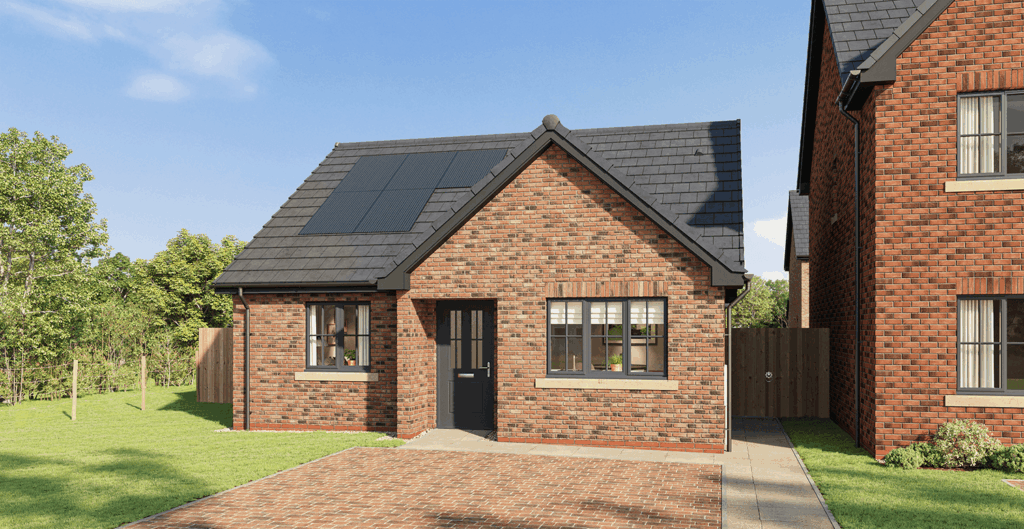
Buying a brand home with Genesis is so much more than just a house purchase. We welcome every new homeowner to our thriving communities; nurture your home buying journey from initial contact to completion and beyond.
Organising a mortgage need not be daunting or difficult. When you buy a Genesis home, we make your experience as seamless and supportive as possible.
Check out our latest developments to find your next new home and buy from a homebuilder who has your best interests at heart.