
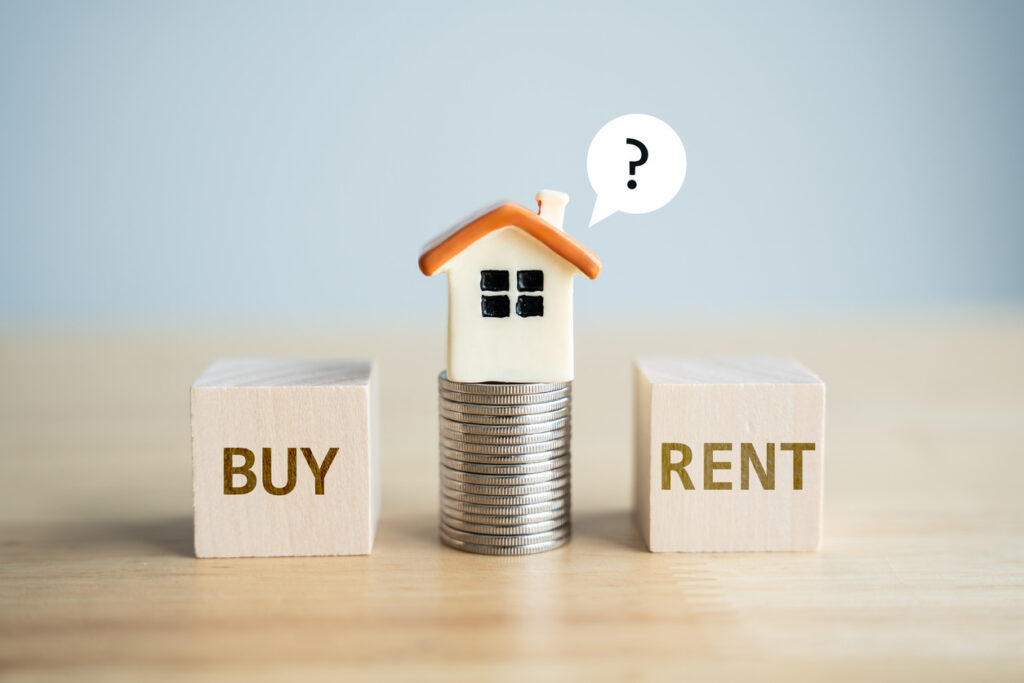
For many people, the decision to rent or buy a house isn’t straightforward, with varying factors that contribute to the complexity of their situation. It’s also one of the biggest financial decisions people will ever make, so it’s vital to understand what you’re committing to before diving in.
If you’re weighing up your options about whether to rent or buy a house, this guide will help you understand:
- Factors that affect whether it’s better to rent or buy
- The real differences between buying vs renting
- The financial benefits of buying vs renting
- When renting is the better option
Is it better to rent or buy a house?
With UK rental prices continuing to rise, more people are asking whether it’s better to rent or buy a house. It’s important to factor in your personal circumstances when looking longer term and deciding to buy a home. Some things to consider:
- Renting offers flexibility and lower upfront costs
- Buying helps you build equity, gain stability, and invest in your future
- If you plan to stay in one area for several years, buying is often more cost-effective as mortgage payments build ownership over time
- Renting suits those who need flexibility or time before committing
Ultimately, it depends on your situation. But in 2026, buying is well worth considering where possible. With energy-efficient new build homes offering lower running costs, many buyers see them as a strong first step onto the ladder or a way to protect long-term value.

Renting vs buying: What’s the difference?
The key differences between renting and buying are ownership, costs, and long-term outcomes. The table below highlights those differences.
| Renting | Buying | |
|---|---|---|
| Ownership | You pay to live in a property owned by a landlord | You work towards owning the property through mortgage payments |
| Investment | No long-term ownership or equity built | Builds equity and long-term financial value |
| Stability | Rent may increase over time | Mortgage payments can be fixed with long-term deals |
| Initial costs | Lower upfront costs (deposit + first month’s rent) | Higher upfront costs (deposit, legal fees, stamp duty where applicable) |
| Long-term costs | The landlord handles most major repairs | The homeowner is responsible for maintenance and upkeep |
| Personalisation | Limited control over the property | Full control to personalise and improve your home |
| Flexibility | Easy to move quickly | More difficult to move quickly |
What are the financial benefits of buying vs renting?
Many homebuyers struggle to quantify the financial benefits of buying a home compared to renting, when the initial costs feel so high. To answer the question “What are the long term costs of renting vs buying?”, it helps to see a real-life cost comparison.
The scenarios below are based on new build homes for sale in the North of England worth £280,000, with a 5% deposit (£14,000), compared to renting a similar property for £1,000 per month.
| Scenario | Renting | Buying |
|---|---|---|
| After 5 years | Around £60,000 spent on rent, with no ownership built | Around £76,000 paid, including deposit and mortgage payments, with approximately £25,000–£30,000 of equity built |
| After 15 years | Around £180,000 spent on rent, with no ownership built | Around £200,000 paid, including mortgage repayments, with potentially £100,000+ equity built depending on property value growth |
Home ownership is also a long-term financial investment with other benefits:
- Mortgage payments build ownership, not a landlord’s asset
- Property values tend to rise, building equity and wealth
- New build homes are energy efficient, reducing bills and maintenance costs
- Fixed-rate mortgages give payment certainty; rents typically rise
- Selling later may deliver a gain if the home’s value increases
- Buying sooner builds equity, making future moves easier
When is renting the better option?
Although buying offers long-term advantages for many people, renting is still the better option in certain situations. Some of those include:
- You expect to move within a short period. Renting provides flexibility without the commitment of a mortgage or the costs of buying and selling property.
- You’re saving for a deposit or improving your credit profile. In this case, before applying for a mortgage, renting can act as a stepping stone towards future home ownership.
- You don’t want the responsibility involved with buying a house. Landlords are usually responsible for major repairs and structural maintenance, which can significantly reduce unexpected costs you may not have the capital to cover.
Get on the property ladder with Genesis Homes
In the current UK market, buying is the shrewder long-term option if you’re ready to put down roots. While renting still serves a purpose for short-term flexibility, rising rental costs and the long-term value of ownership continue to encourage buyers into the market.
If you’re exploring new build homes for sale, gorgeous modern developments such as Olive Green View in Halton can offer energy efficiency, lower maintenance costs, and a fresh start in a thoughtfully designed community. Genesis Homes’ range of high-quality new build properties is designed to support modern living and long-term value for homeowners in 2026.
If you have a property to sell, our Help to Move scheme makes it even easier. We manage the sale of your existing home for you, including liaising with estate agents, marketing, and ongoing support throughout the process.