
If you’re thinking about selling your home, you might be feeling a little overwhelmed at how long and complicated the process can be.
But does it always have to be long and complicated? Exactly how long does it actually take to sell a house in the UK? And what are the steps that shape the process of selling a house?
In this guide, we walk through the typical stages of selling a home so you have a clear idea of what to expect and how long the process takes. Plus, we cover some practical tips to help the process run more smoothly.
What are the stages of selling a house?
Before we explore the home selling timeline, let’s take a look at the different stages of selling a house:
- Preparing the property for sale. Making sure your home is clean, decluttered, and well-presented for photos and viewings. Small repairs, fresh paint, and staging can make a big difference to buyers.
- Getting a valuation. An estate agent or surveyor assesses your property to determine a realistic asking price based on market conditions and comparable homes in your area
- Listing the property. Your property goes on the market through estate agents and online property websites like RightMove and Zoopla. A house listing typically includes professional photos (and sometimes videos or a 3D walkthrough), floor plans, and a description of your property.
- Receiving offers. Potential buyers submit offers, which you can accept, reject, or negotiate. Once you agree on a price, you move on to the legal process.
- Conveyancing process. The legal stage handled by solicitors or licensed conveyancers. The process includes property searches, contract preparation, and resolving any issues from surveys or legal checks.
- Exchange of contracts. Once both parties are satisfied, you exchange contracts. At this point, the sale becomes legally binding, and a completion date is usually agreed upon.
- Completion. The buyer transfers the funds, you hand over the keys, and ownership officially changes. The property is now sold!
How long does selling a house take? A simple timeline
In the UK, selling a home takes an average of five months.
This timeline varies depending on market conditions, sale price, location, and whether you’re part of a chain.
Here’s the typical timeline for selling a home:
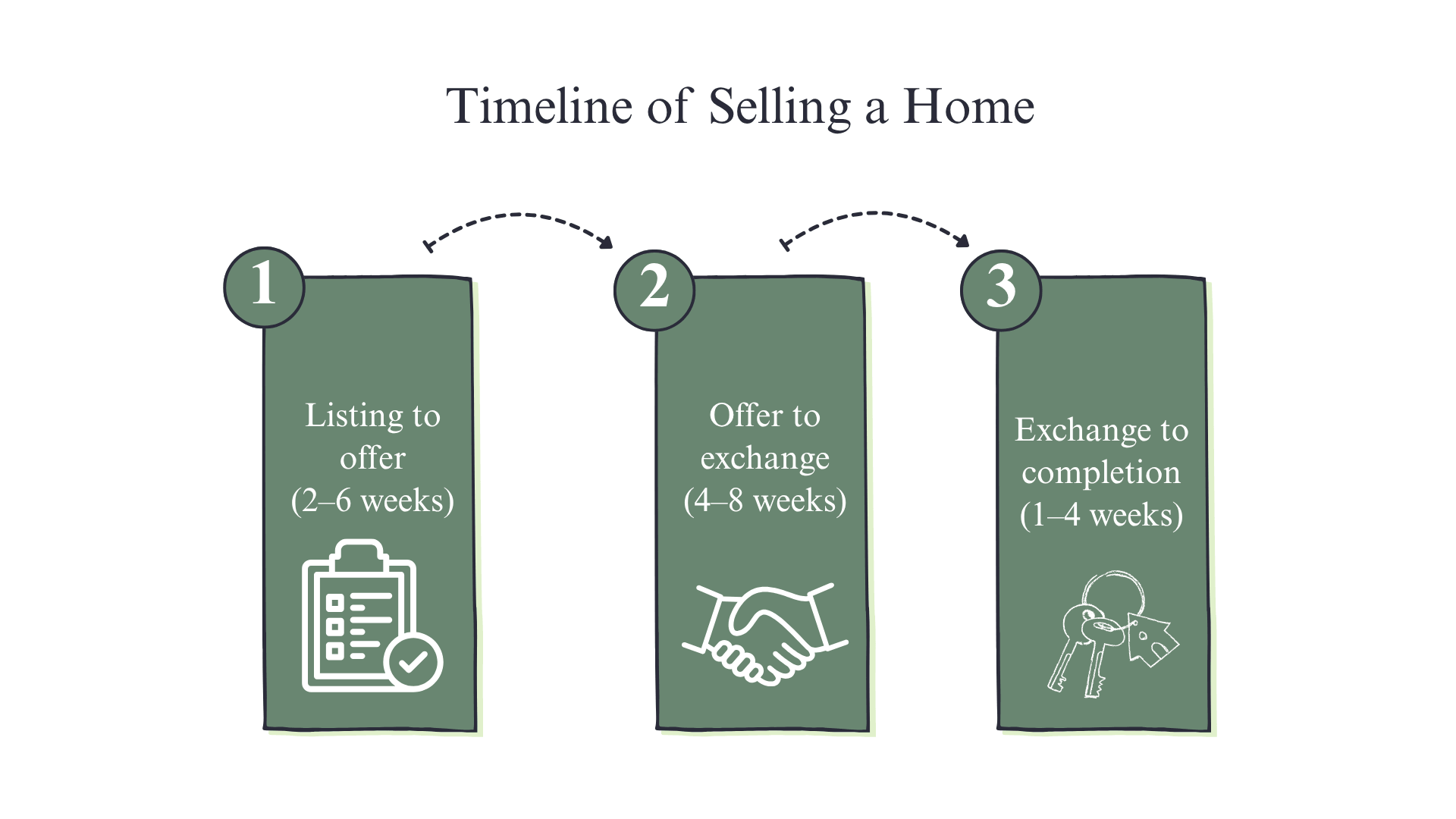
Let’s look at this timeframe in more detail.
Listing to offer (2–6 weeks)
Once your property is on the market, it usually takes 2–6 weeks to receive an offer, though this can vary depending on location, price, and demand.
During this time, you’ll:
- Market the property through estate agents, online portals, and viewings.
- Receive and negotiate offers from potential buyers.
Offer to exchange (4–8 weeks)
After accepting an offer, the period before exchanging contracts typically lasts 4–8 weeks.
This stage involves:
- Conveyancing (legal checks on the property).
- Mortgage arrangements for the buyer.
- Surveys and inspections.
- Resolving any issues flagged during the survey or searches.
Exchange to completion (1–4 weeks)
After exchanging contracts, completion usually happens within 1–4 weeks. In some cases, you can exchange and complete on the same day.
At this stage:
- Both buyer and seller are legally committed.
- The buyer transfers the funds.
- You hand over the keys, and the property officially changes ownership.

Common factors that affect how long it takes to sell a house
Property demand
High-demand properties sell faster. Homes in popular areas or with desirable features (like gardens or off-street parking) usually attract more buyers, which can shorten the time to receive offers.
Pricing
Overpriced properties can linger on the market, while competitively priced homes often attract multiple offers quickly. Accurate valuations help ensure your property sells within a reasonable timeframe.
Location
Location plays a major role in how attractive a property is to buyers. Overall desirability of the area can influence how quickly potential buyers decide to view and make offers on a property.
Areas with strong transport links, reputable schools, and access to shops and amenities tend to generate more buyer interest.
Side note: The locations for our Genesis Homes developments are carefully selected. We focus on areas with good transport links, local amenities, and strong communities. By building homes in these areas, we ensure that our new build homes are convenient to live in and help homeowners enjoy a better quality of life.
The buyer’s mortgage approval
Many sales depend on the buyer securing a mortgage. Delays in approval, valuation issues, or lenders’ conditions can slow the process, even if the offer has already been accepted.
Property chain length
A property chain happens when several property sales are linked because buyers need to sell their current home before they can complete their purchase.
Longer chains increase the risk of delays because every sale must be completed in sequence. A single hold-up (like a buyer pulling out) can affect everyone in the chain.
4 simple tips to sell your house faster
1. Price your property correctly
Setting a realistic asking price is one of the most important factors in attracting buyers quickly. If a property is priced too high, it may sit on the market longer and receive fewer viewings. A well-researched price based on local market conditions can encourage stronger interest and competitive offers.
2. Improve presentation and stage the home
A clean, well-presented property makes a stronger first impression. Decluttering, completing small repairs, and arranging furniture to highlight space can help buyers imagine themselves living in the home.
3. Use high-quality listing photos
Most buyers begin their search online, so professional photos can significantly influence whether someone books a viewing. Clear, well-lit images that showcase key rooms and features help your listing stand out and generate more interest.
4. Choose the right estate agent
An experienced estate agent understands the local market and knows how to market your property effectively. The right agent will price your home appropriately, promote it to qualified buyers, and manage negotiations to keep the sale moving forward.
Selling a house checklist
Use this checklist to make sure you’ve covered the key steps before and during the sale process.
- Get a property valuation from one or more estate agents to value your home.
- Obtain an Energy Performance Certificate (EPC), a legally required document that shows your home’s energy efficiency rating.
- Choose and instruct a solicitor or conveyancer to handle the legal aspects of the sale.
- Prepare key documents like title deeds or planning permission approvals to speed up the process
- Prepare the property for sale so the home looks its best for photos and viewings.
- Arrange and manage viewings with your estate agent (being flexible with viewing times can help you secure more viewings)
- Review and negotiate offers by considering the price offered as well as the buyer’s position (such as whether they are part of a property chain or have a mortgage in principle)
- Begin the conveyancing process with your solicitor to start the legal steps of selling your house.
Move into a new build home after selling your house
If you’re selling your home, buying a new build home could be the ideal next step.
New build purchases are often chain-free, reducing the risk of delays caused by other buyers and sellers in the chain. After choosing a property, you simply reserve the home with a fee while the legal work and your sale progress.
Genesis Homes also offers a Help to Move scheme, which helps you sell your current property and transition smoothly into your new home.
Take a look at our new housing developments in Cumbria.